
{{ r.name }}
{{ r.kind }}
{{ r.body }}
You live in one building. Work in another. Take your children somewhere else. Drive somewhere else to exercise. See a doctor somewhere else. Your parents grow old somewhere else. Friends stay in a hotel because there is no room at home.
And between all of it you spend your life driving, booking, logging in, waiting, organising and paying. Every part has its own building, operator, opening hours and login.
We built life this way. It doesn't have to stay this way.
When buildings work better, people have more time to live.
Fourteen, in this case. One family, one city. Each one a separate operator, a separate way in, a separate account. Nobody designed this. It just accumulated.
Every line is a journey somebody actually makes, most of them more than once a week.
The same fourteen things, within reach of each other. One account, one way in.
Five times, until it stops being your fault.
Because your days are eaten up by commutes, coordination, waiting, logins, queues, handovers and the endless chores of keeping everything running.
The first things to disappear are the things that actually keep you alive. Movement, proper meals, sleep, time with people, time to think, time to recover. Nothing collapses in one dramatic moment. There is no single breaking point. You just start living in permanent catch up, always one step behind, even when you are doing everything right.
The real damage. Not lower productivity. A smaller life. Time is the space in which life happens, and when the system slowly eats that space, life doesn't explode. It quietly contracts.
Because we built cities like production lines. We separated life into functions and put each function into its own building and its own place.
Living here. Working there. Shopping somewhere else. Seeing the doctor somewhere else again. Getting your hair cut somewhere else. Growing old in yet another place. This was not an accident. Modern cities were shaped by industrialisation and zoning. Housing, offices, shops, schools, hospitals and care homes were, and often still are, planned as separate zones and separate building types, run by different organisations.
What that leaves you with. A life made of handovers. Between buildings, operators, rules, opening hours and systems. With every handover, continuity is lost and responsibility gets thinner. You are a patient here, a customer there, a file number somewhere else.
Have you ever actually experienced a 15 minute city? And if you have, are you ready to move there tomorrow?
Joking aside, distance was never the real problem. The processes are broken. Even when everything is close, nothing really works together. You still queue. You still explain yourself. You still hear “come back tomorrow” or “please use the portal”. You can live five minutes from the office, the gym, the doctor, the supermarket and the hairdresser and still lose hours every week coordinating, waiting, logging in and being passed on. Putting things closer helps with travel. It does not make places work as one.
And the other problem. You can't rewind and rebuild whole countries. Most people already live where they live. The buildings are there. The streets are there. The zoning is there. Redesign the city is a nice idea on a slide. It does not solve the life people are living now.
Because our buildings and cities are built and run on the wrong idea of how life works. And we have digitalised that shit.
You see it every time you use a self checkout. Nothing got simpler. You scan, you bag, the machine beeps, you wait for approval, you fix the error yourself. The work did not disappear. It switched sides, from staff to you. We call this progress. In reality we wrapped the same old mess in software and put a bot in front of it so that no human has to deal with you. It looks efficient on a screen. Then try getting help for a parcel that went missing. The same happened in buildings and in homes. Doors, heating, parking, deliveries, visitors, care and maintenance all became apps, portals, tickets and logins.
Who does the glue work. You. Or your partner, your child, your parents. And when it gets too much, you pay somebody through the nose to drive, call, coordinate and check in. Those services do vital work, but they exist because everyday life was split apart in the first place.
Because modern life has changed and buildings haven't.
Families are smaller and spread across cities, countries and continents. Both parents work. Grandparents live far away. Commutes eat hours. Offices are so uninspiring that people have to be forced back into them. Our elderly live in places that keep them safe but not alive, with shockingly few visitors. Homes are called castles, but most are small, expensive boxes. There is rarely space for a parent who needs help, for a child who comes back, for working in peace, or for friends to stay.
Then the second shift. You work more and more just to pay for four walls, and when you finally get inside it begins. Cooking, cleaning, laundry, organising, fixing. You are not a movie star with staff. You are your own cleaner, driver, nurse and administrator, every single day.
We designed buildings around functions. Each one became a separate building type, a separate organisation and a separate economic model.
But nobody lives in functions. A life contains all of this at once, and the mix changes through a day and through a lifetime.
People change. Buildings don't.
Not every building needs all of this. That matters. A building, a campus, a cluster or a neighbourhood can provide it between them. The point is to stop designing every building as an isolated single purpose island.
The highlighted ones are what a conventional office building usually covers. The rest happen somewhere else.
Energy generation and storage. EV charging. Logistics. And even local digital infrastructure such as distributed micro data centres, bringing compute and storage closer to where it is needed.
Here is one building through a single day. Move the hour and watch who is in it. Nothing here is impossible. It is simply hard to operate, which is a different problem, and the one we went after.
Because somebody would have to answer all of this, all day, by hand. This is the complexity that made us separate everything in the first place.
And that is only the operating side. If you own the building, you would also have to find every one of those providers yourself, and sign each of them separately.
All of it is the same six questions, asked again and again.
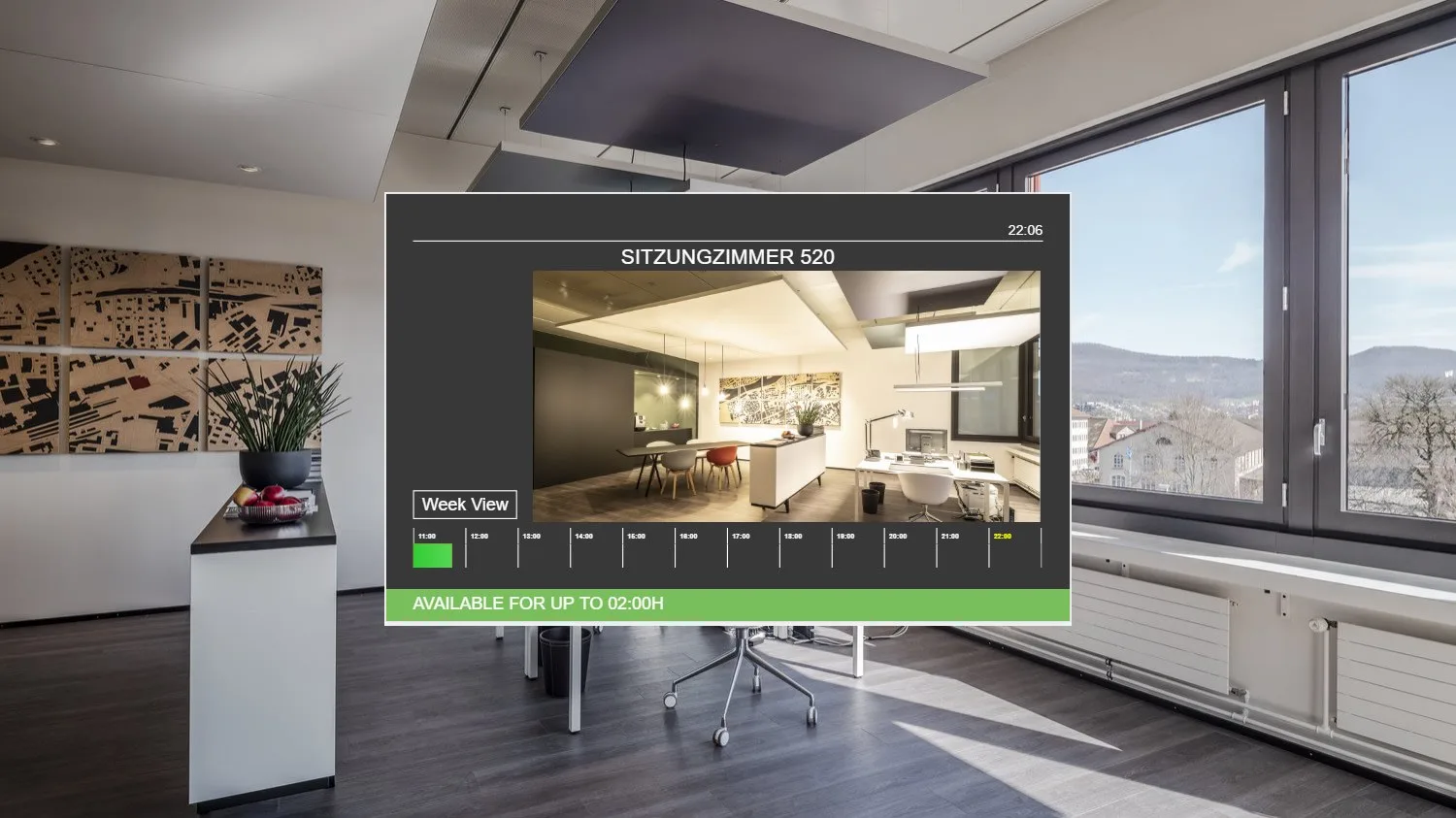
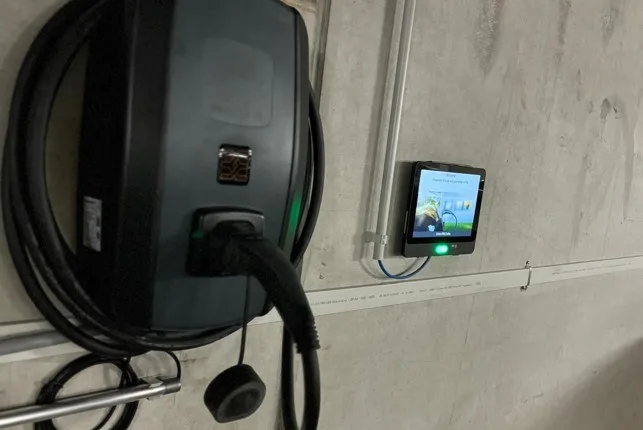
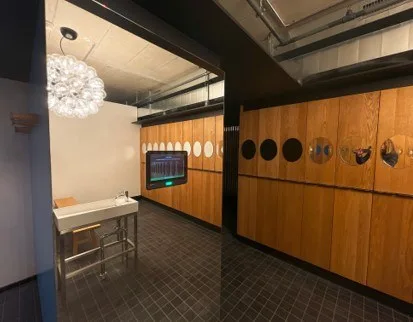
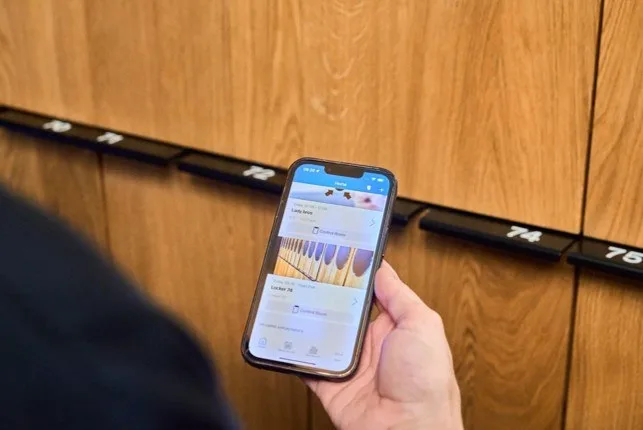
Most buildings run on a patchwork: doors and access from one supplier, heating from another, then lighting, charging, signage, parking, lifts, lockers, billing. Each one separate, each separation bridged by a person.
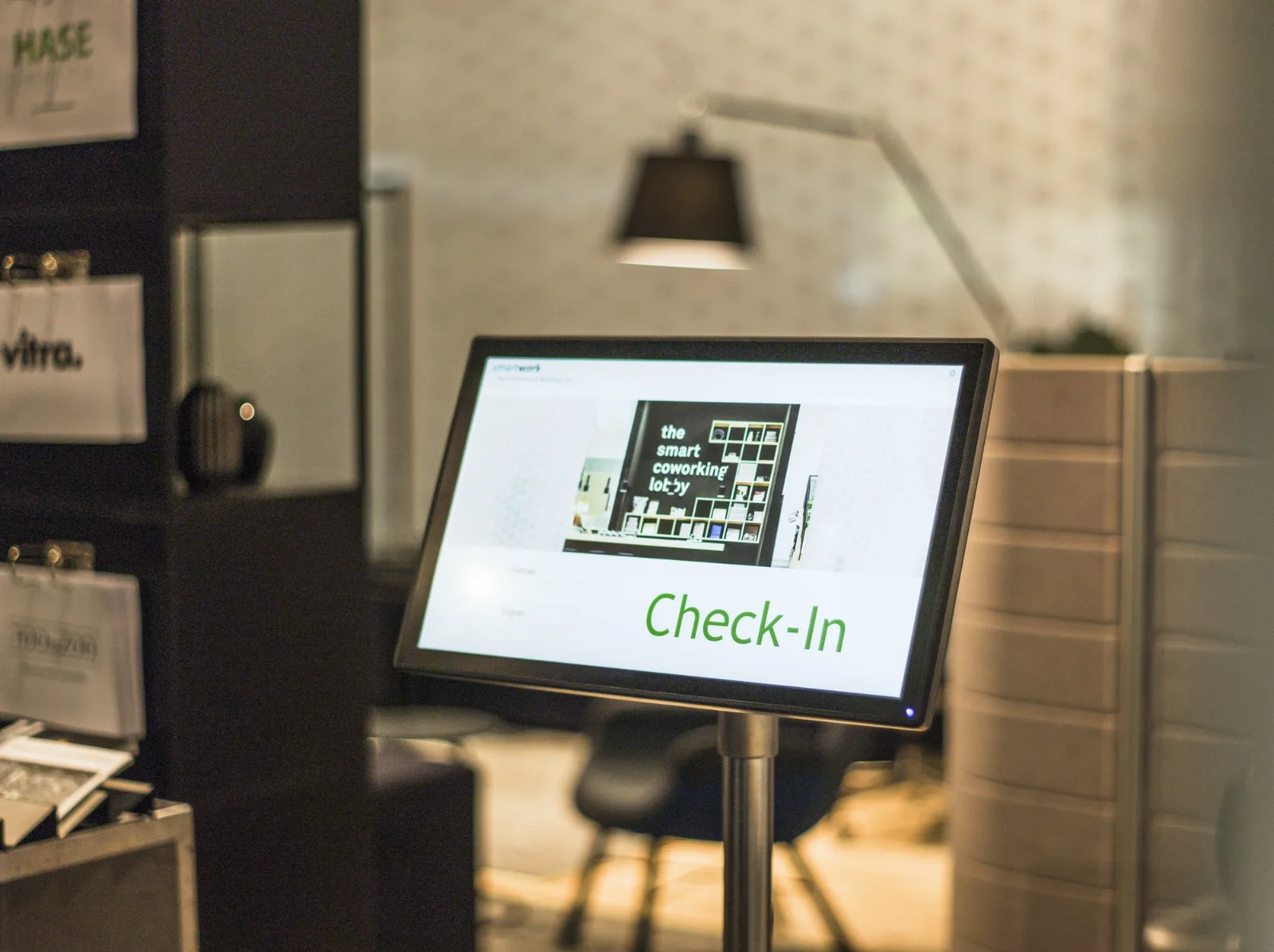
We replaced the patchwork with one piece of software we wrote ourselves. Once those six questions have consistent answers, a room can be found, booked, opened, used, billed and released with nobody in the middle.
A head office. An office building. A hospital. A hotel. A block of flats. A campus. It handles the complexity underneath, so the building is simpler to operate and simpler to use. Most of the 70 buildings we operate today use pb3 in exactly this way, and take nothing else from us.
The same holds for newer infrastructure. Where a building carries energy storage, charging or local digital infrastructure such as a micro data centre, pb3 is the layer that operates it alongside everything else.
But once that operating infrastructure is in place, something else becomes possible.
The building can provide the space. But somebody still has to provide the service.
A salon without a hairdresser is equipment. A kitchen with nobody cooking feeds nobody. A childcare room without carers helps no parent. Infrastructure on its own is not a service.
Space + pb3 + Shared infrastructure + Somebody good at something
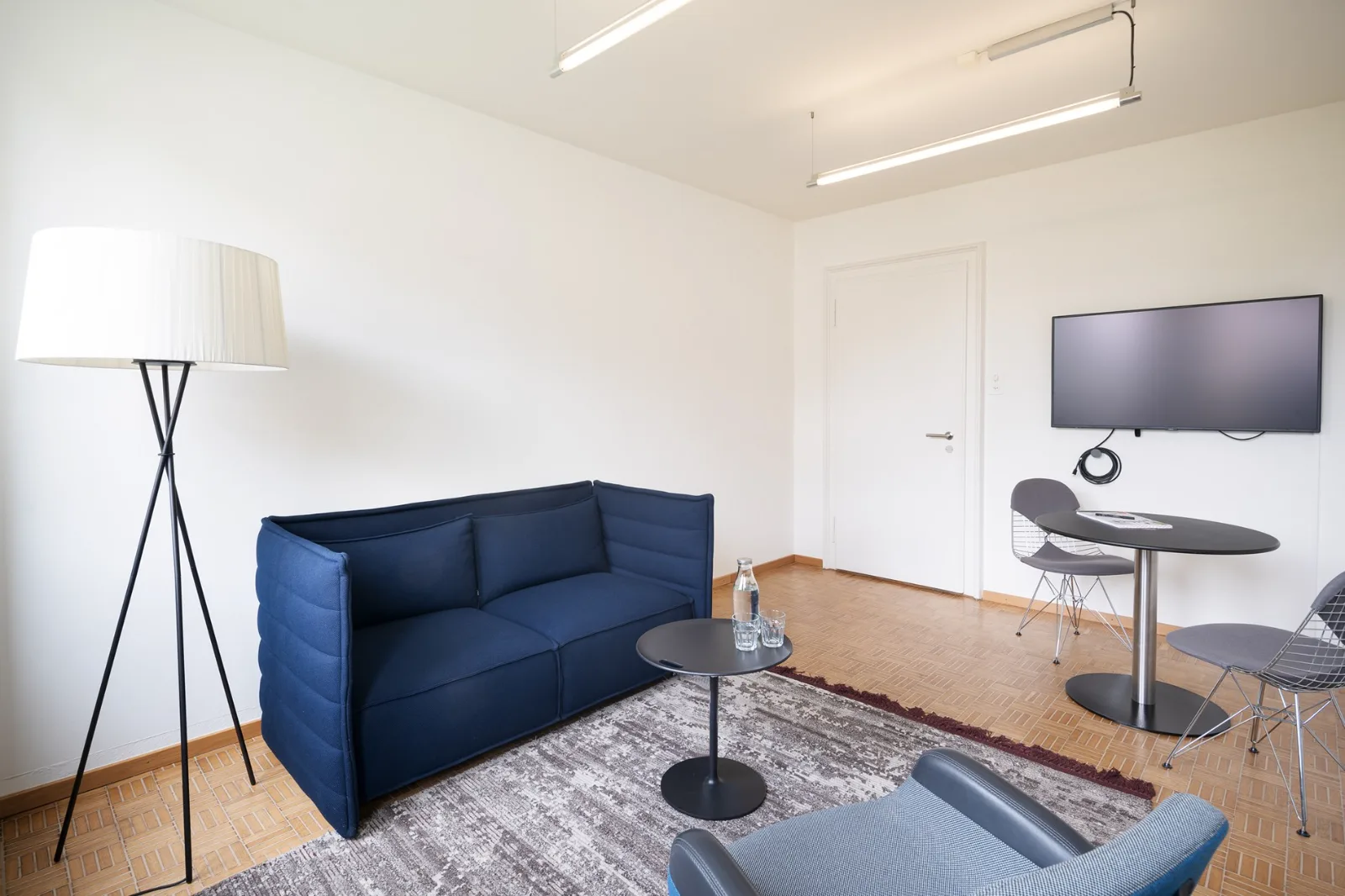
Meeting rooms, parking, lockers, storage. Nobody needs to be there at all.
Treatment room, gym, salon, studio, kitchen. The fit out stays, the user changes.
Hairdresser, trainer, physio, carer, teacher, chef. The building carries the overheads. They bring the skill.
One room in one building, across one week. Same four walls, four different services.
Booked by a company two floors up that needs a big table four times a month. They pay for those four, not the other twenty six days.
Who turns up: Whoever booked it. What pb3 does: Finds it, books it, opens the door, bills the company. Booked by: By the hour.
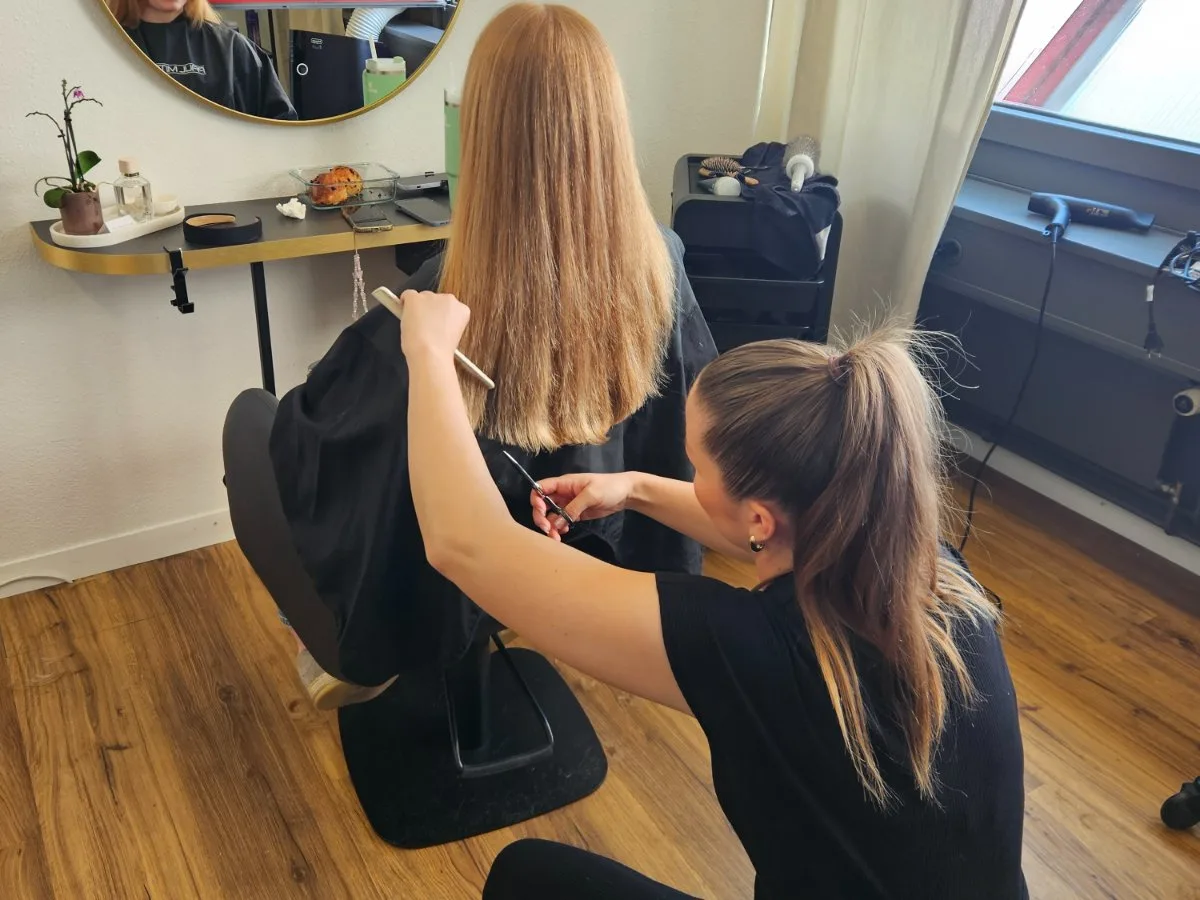
Maria rents the room and the chair for the afternoons she has customers. No lease, no fit out, no empty Mondays to pay for. Nina uses it on other days.
Who turns up: Maria, an independent hairdresser. What pb3 does: Access for her, booking for her customers, payment, cleaning. Booked by: By the afternoon.
Two physios share it across the week. Neither could justify a practice here alone. Together, with the building supplying the patients, they can.
Who turns up: Two physiotherapists. What pb3 does: Separate calendars, separate access, separate billing, same room. Booked by: By the half day.
Yoga after work, taught by somebody who works in the building. Twelve people, no commute, no membership.
Who turns up: A trainer who also has a day job. What pb3 does: Class booking, door opens at 18:15, locker released, everyone charged. Booked by: By the class.
Two real examples, because the economics are easier to see than to argue about
They work independently at daycrunch® tecdeck.work in Glattbrugg. Neither paid for a salon up front. They started with the hours they had customers for and became independent gradually.
A customer is paying for one thing: a good haircut. Everything in the left hand column has to be paid for before the first one sits down.
Months of cost, and usually a bank, before anybody has booked anything.
The rest already exists and is shared with everyone else in the building. They add hours when they have customers, and stop when they don’t.
We don't make the human cheaper. We cut the unnecessary costs around them. The same arithmetic works for a physio, a trainer, a cook.
This is the opposite of gig work. Nobody is turned into a task on somebody else’s app.
Scheduling, customer messages, translation, invoicing, the tax return nobody wants to do. That part is early and we are still working out what helps.
It also changes what counts as a business. A physio two afternoons a week. A trainer before and after office hours. They need enough demand for their own contribution to be worth making, not for a whole company.
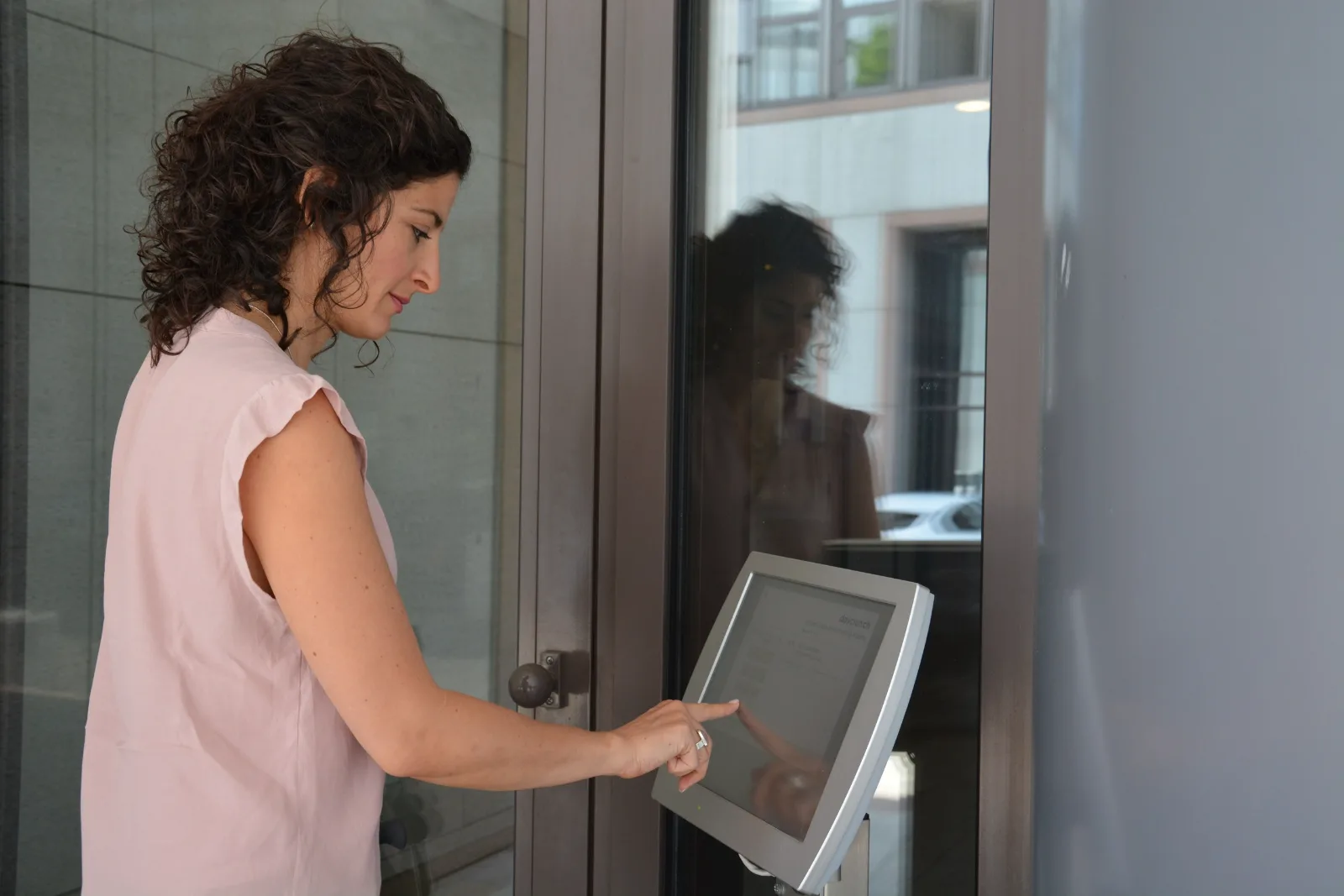
One person, and the reception, booking and billing of a much bigger operation behind the panel.
Not cheap labour. Not gig work. Capability.
Work, food, health, everyday services, and in time homes, in one property, on shared infrastructure. Each use costs less because it is not paying for its own lease, reception and booking system.
The word is literal: a factory for daily life. It is the name we use when a building starts doing that, and it is the newest of the three things we do.
A landlord waits for a tenant.
A marketplace searches for a provider who already exists.
We can help create the service.
Nowhere near enough for a conventional practice with its own lease, fit out and reception. So nothing gets built, and three hundred people keep travelling across town.
The interesting question is not how to attract more people. It is how far the threshold can come down.
We don't just make room for businesses. We help create the ones a place is missing.
An accelerator does this for software founders. Same idea for ordinary services, with the customers, the space and the technology already here.
That is what kills most small businesses in the first year. Where this stands: pb3 is mature and running. daycrunch® runs in several buildings. LEBENSFABRIK® is the newest and we are testing it building by building. Some of it will turn out to be wrong.
Same building as before. Step through what happens when a need turns into a service, and that service brings more people.
Not a building with lots of amenities. A place capable of developing what its people need.
For developers, owners and centre operators
Every small business needs footfall. The shopping centre solved that with size. That is why it needs a big site, a regional catchment and anchor tenants, and why there are only so many places you can build one.
A shopping centre needs thousands of visitors. The rents are high, the infrastructure is expensive, and every shop or service needs enough footfall to pay for it.
We are building a different model. A provider starts with the people already in the property, sometimes fewer than a hundred, and adds customers from the surrounding neighbourhood.
The building provides the base load. The neighbourhood provides the rest.
A building of a few hundred people can start to behave like a place serving thousands. That changes what counts as a site. The office building you already own. A suburb. A campus. A residential block. A small town.
The building does not have to carry a service on its own. Residents, tenants and staff are the reliable part. Neighbours and nearby businesses make up the rest. A service can work here that would not survive on the building alone.
Two to three hundred people on a normal day is the scale we design for, not a number anybody has proven. Different services need different amounts of demand, so we test each one.
An office building, a campus, a residential block or a village centre can all work. Instead of bringing everybody to one large destination, smaller useful services can exist in many more places, close to where people already are.
Some grow old there without being moved out of everyday life. Family can visit and stay the night. Children and elderly people are not hidden away in separate specialist worlds.
We are not trying to recreate an old village. We want the human connection of a small town, the variety of a city, and the coordination software is good at.
It comes from seeing the same people often enough to recognise them, and from being useful to each other.
Connection comes out of the economics. That works better than organised networking.
Now we have earned the right to say this
Make people more capable, not unnecessary.
Remove complexity, not humanity.
Digital in the background. Human in the foreground.
We run the technology, the access, the booking, the payments and the customer discovery. On paper that makes us exactly the kind of powerful intermediary we have spent a page complaining about. Good intentions are not a safeguard.
As our technology gets more powerful, the people using it should get more powerful too. If that stops being true, we have built the wrong thing.
The mechanism is the same in all three columns: shared infrastructure gets used more often, by more people, for more hours.
We are not going to put a return figure on this page. It depends on the building and what is already there. Send us an address and we will do the sums.
pb3 operates the infrastructure. daycrunch® adds the spaces and services. Click a floor to open it, then click a point to see what sits there.
Seven floors, one operating system.
Parking at the bottom, roof at the top. Every floor is running on the same identity, the same booking and the same billing, which is what lets a small service exist on any of them.
The part of a building that usually earns nothing. Terrace, garden and solar sit on the same roof, and all three are allocated, booked and metered like anything else in the house.
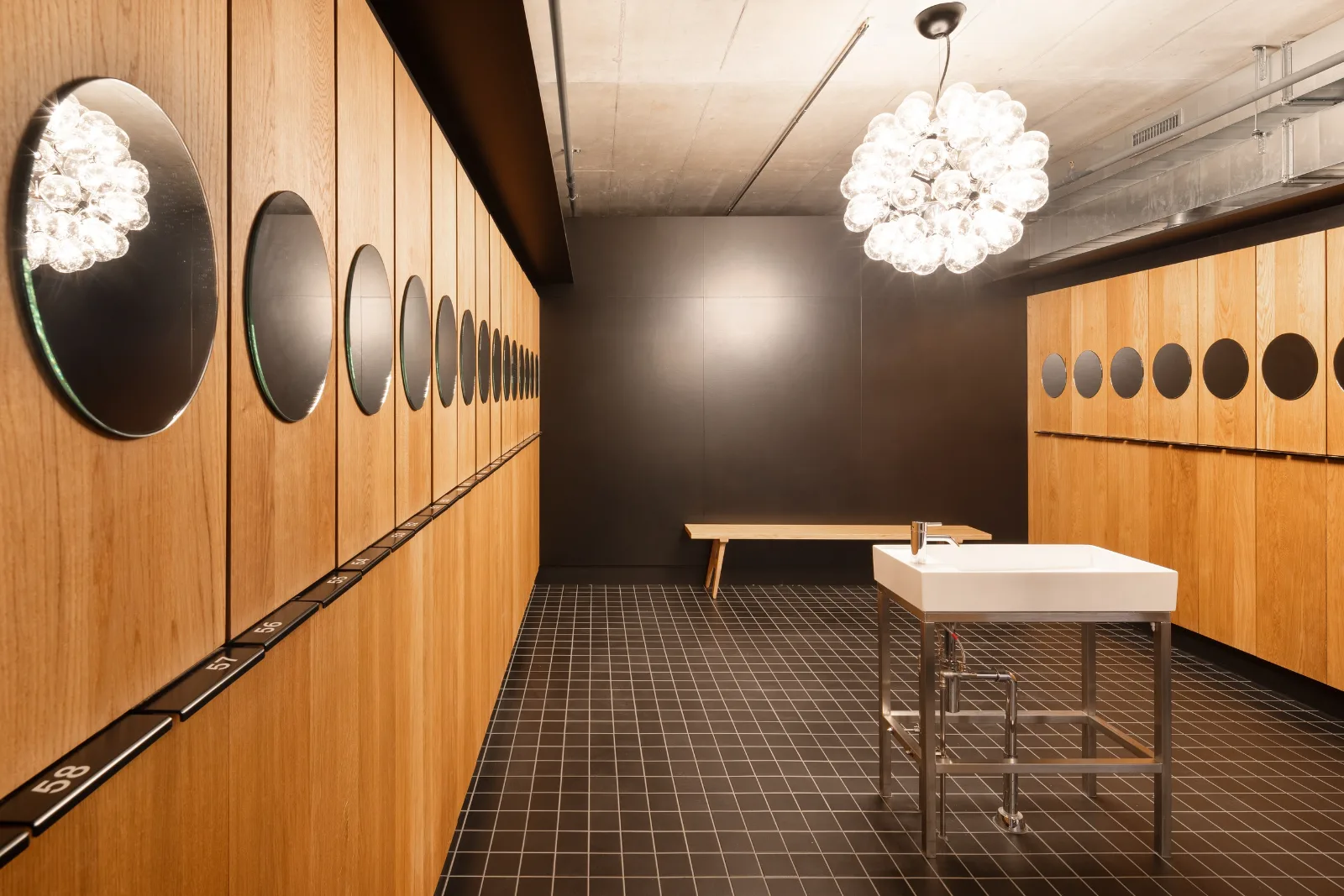
Services that normally need a membership base of thousands. Sharing the changing rooms, the access and the booking is what makes them work for a few hundred people.
Deliberately empty. A floor held loose for artists, pop ups, a school, a trial of something nobody has asked for yet. Empty space is cheap to hold when access and billing are already installed.
This floor makes the rest of the building more valuable. It takes peak days and temporary growth off the tenants above and below, without anybody signing another long lease, and serves short term and serviced users the rest of the time.
Ordinary let offices, on the same system as everything else. The tenants keep their own space and stop paying for the reception, the meeting rooms and the coffee machine they only sometimes need.
The floor that decides whether a building belongs to its street. Reception, cafe, shop and lockers, open to the neighbourhood and not only to the tenants.
Usually the least intelligent part of a building and the easiest to fix. Tenant, visitor and shared parking on one system, charging billed per session, and spaces that can be let by the hour instead of the year.
We found this model by operating real buildings and hitting the same problems over and over. The numbers below are why we think we have any right to propose something as ambitious as LEBENSFABRIK®.
One building, many uses
A conventional office property now carrying work, food, health, services and events, with daycrunch spaces inside it and pb3 underneath all of it.
Vacancy activated in stages
Empty floors became bookable space with access control, chargers and hybrid contracts, floor by floor, instead of waiting for one conventional tenant. We will publish numbers when they are worth publishing.
Shared infrastructure, small businesses
Maria and Nina cut hair here, independently. Both took the room for the hours they had customers for rather than signing a lease. Shared infrastructure is what makes a one person business viable inside a workplace.
pb3 at portfolio scale
More than 4,000 doors across the Design Offices portfolio run on pb3, alongside rooms and shared resources across Germany. Different buildings and users, one operating layer underneath.
pb3 on its own
A corporate headquarters running pb3 for visitor management. No daycrunch, no LEBENSFABRIK, no shared services. Mornings are the hard part: everyone arrives for the same meetings and the queue builds. The reception team has every visitor and every host on screen before the person reaches the desk, so processing is fast and still properly checked.
Coming soon
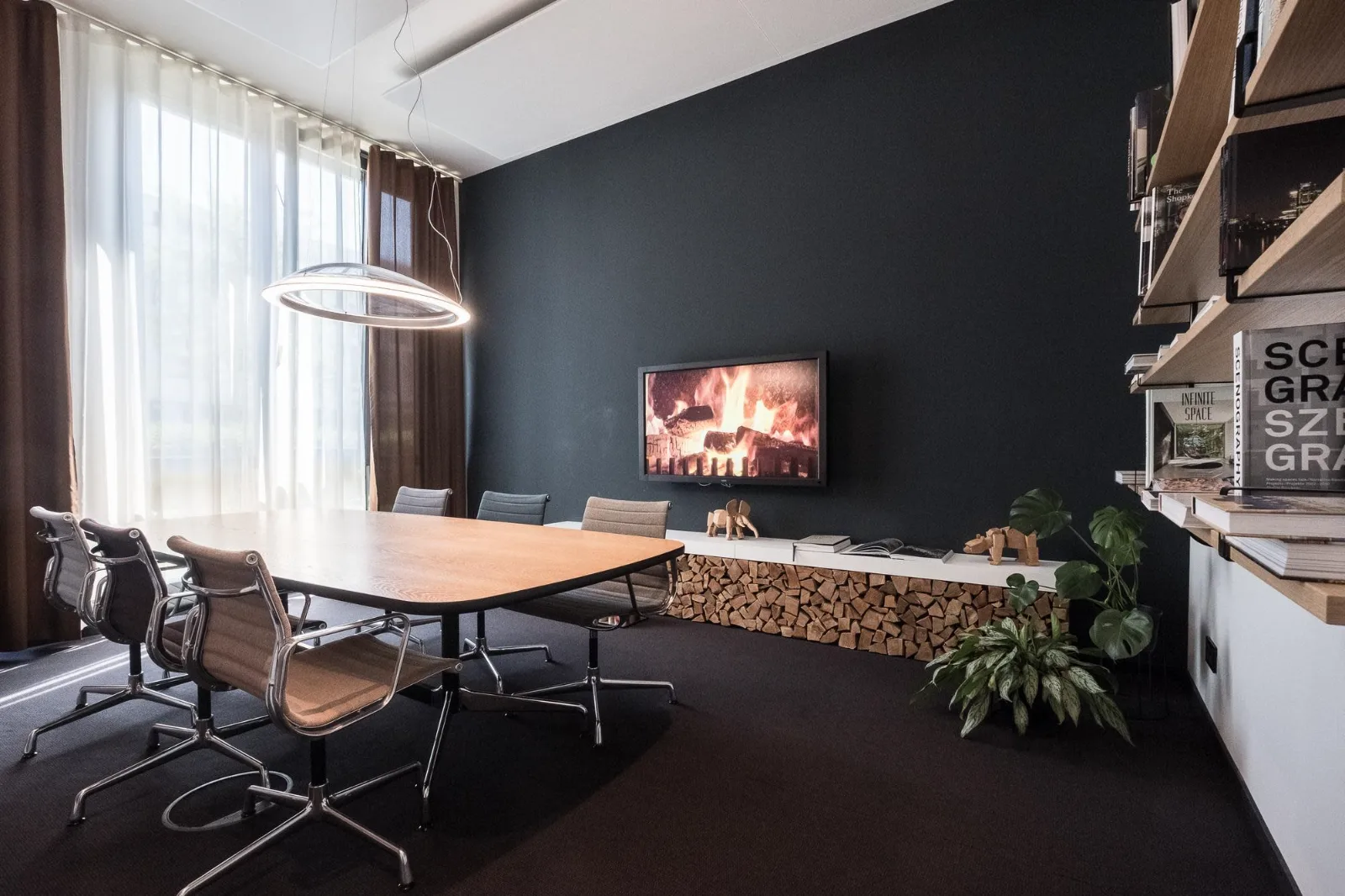
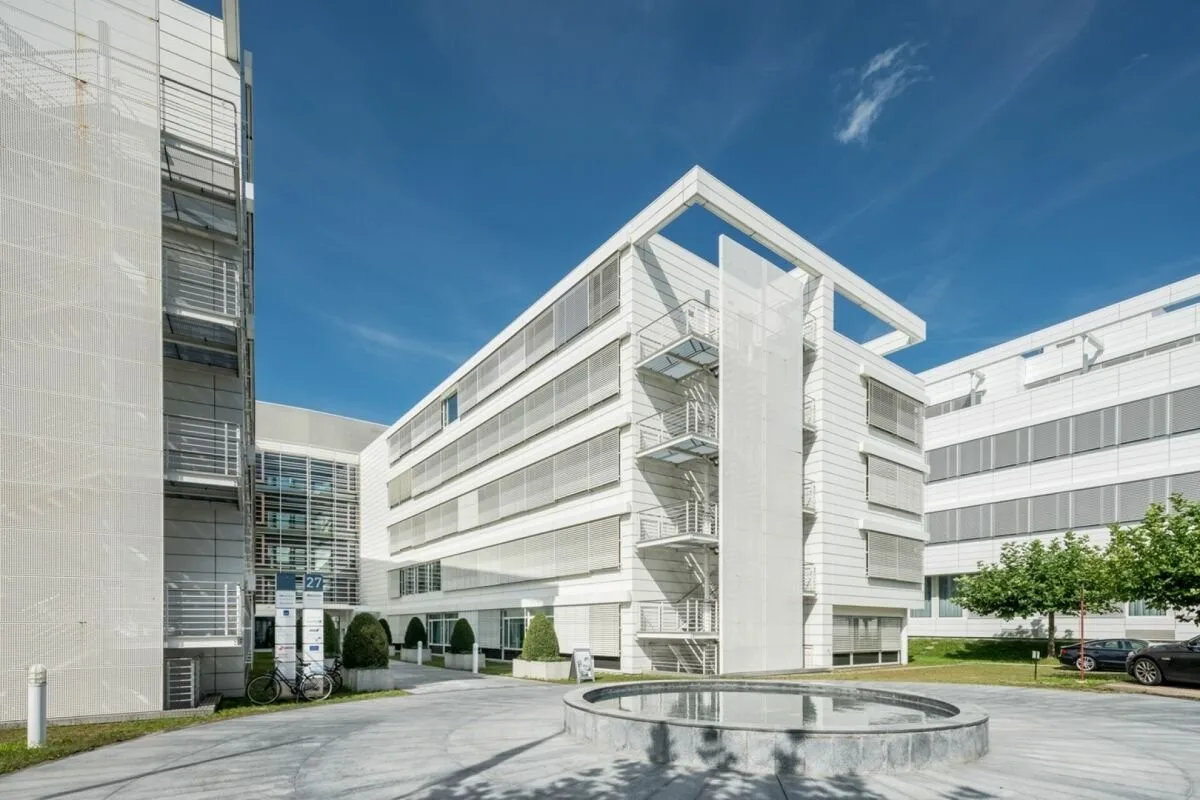
Near Zurich Airport we are bringing more of the pieces together in one building: workspaces, meeting and event space, food, everyday services and wellbeing, with pb3 underneath.
CHARLIE is where the LEBENSFABRIK® idea starts to become a building.
Operates the complexity.
People, buildings, resources, permissions, bookings, access and payment in one place. Runs independently in any suitable building.
Turns infrastructure into services.
Spaces, shared kit and human providers become services people can actually book and use.
Turns the building into an ecosystem.
Work, living, services, care and leisure in one place, and help developing what the community is missing.
Not three products. Three levels of capability. Most customers start at the first one.
Create or reposition a building, a campus or a LEBENSFABRIK® with us.
We activate and run the spaces, the services and the infrastructure.
Deploy the software into your own building or portfolio and run it yourself.
Buildings shouldn't just contain life. They should make it better.
That is all we need to start. We will tell you what we would do with it and whether we think it is worth doing.
Performance Buildings AG, Niklausstrasse 34, 8105 Regensdorf
{{ c.hero.lead }}
{{ c.hero.sub }}
{{ c.hero.kicker }}
{{ c.hero.shortcutIntro }}
{{ c.film.headline }}
{{ c.film.sub }}
{{ c.life.lead }}
{{ lifeCaption }}
{{ c.life.shellLabel }}
{{ n.name }} {{ n.place }}
{{ statOperators }}{{ c.life.statOperators }}
{{ statLogins }}{{ c.life.statLogins }}
{{ statTime }}{{ c.life.statTime }}
{{ c.whysSection.sub }}
{{ c.problem.kicker }}
{{ c.problem.left }}
{{ c.problem.right }}
{{ c.problem.closeA }}
{{ c.problem.closeB }}
{{ c.ecosystem.lead }}
{{ c.ecosystem.legend }}
{{ c.ecosystem.infraTitle }}
{{ c.ecosystem.infraBody }}
{{ c.day.lead }}
{{ clock }}
{{ hourNote }}
{{ f.label }} {{ f.sub }}
{{ o.label }}
{{ c.storm.lead }}
{{ c.storm.lead2 }}
pb3
{{ c.pb3.tagline }}
{{ c.pb3.left }}
{{ c.pb3.right }}
{{ c.pb3.anyTitle }}
{{ c.pb3.anyBody }}
{{ c.pb3.anyInfra }}
{{ c.pb3.anyBridge }}
{{ c.bridge.lead }}
{{ c.bridge.so }}
daycrunch®
{{ c.dc.tagline }}
{{ c.dc.col1Title }}
{{ c.dc.col1Body }}
{{ c.dc.col2Title }}
{{ c.dc.col2Body }}
{{ c.dc.col3Title }}
{{ c.dc.col3Body }}
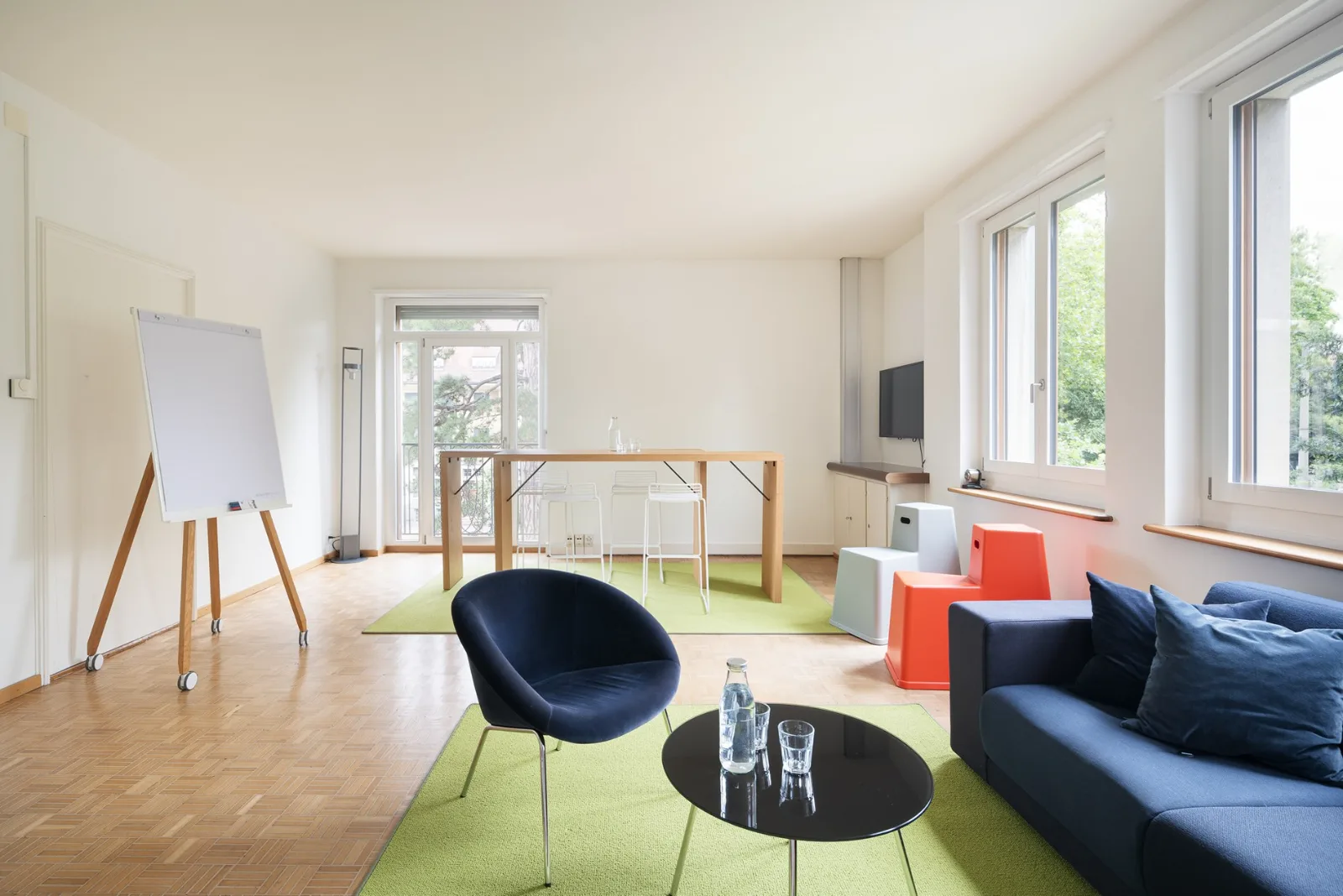
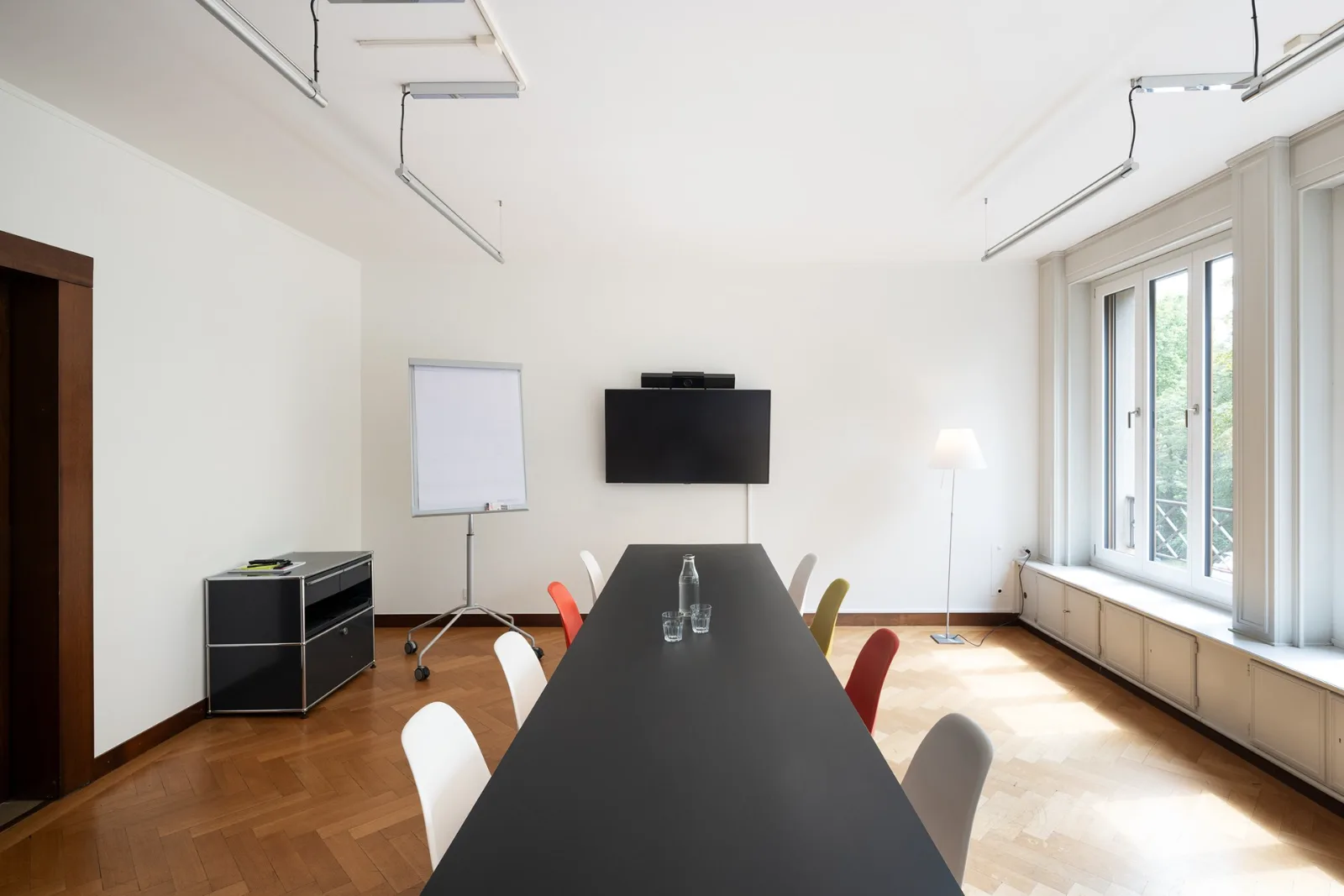
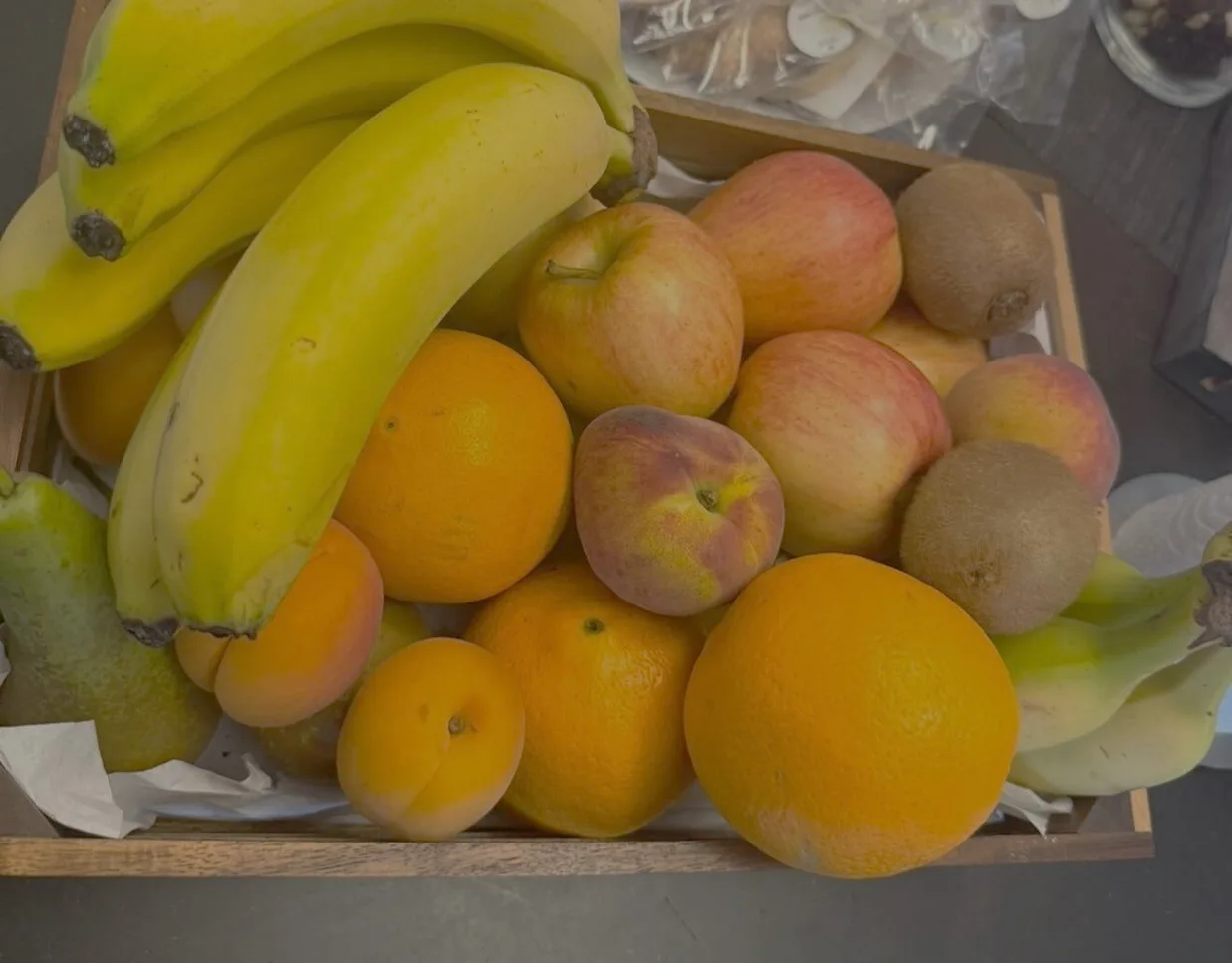
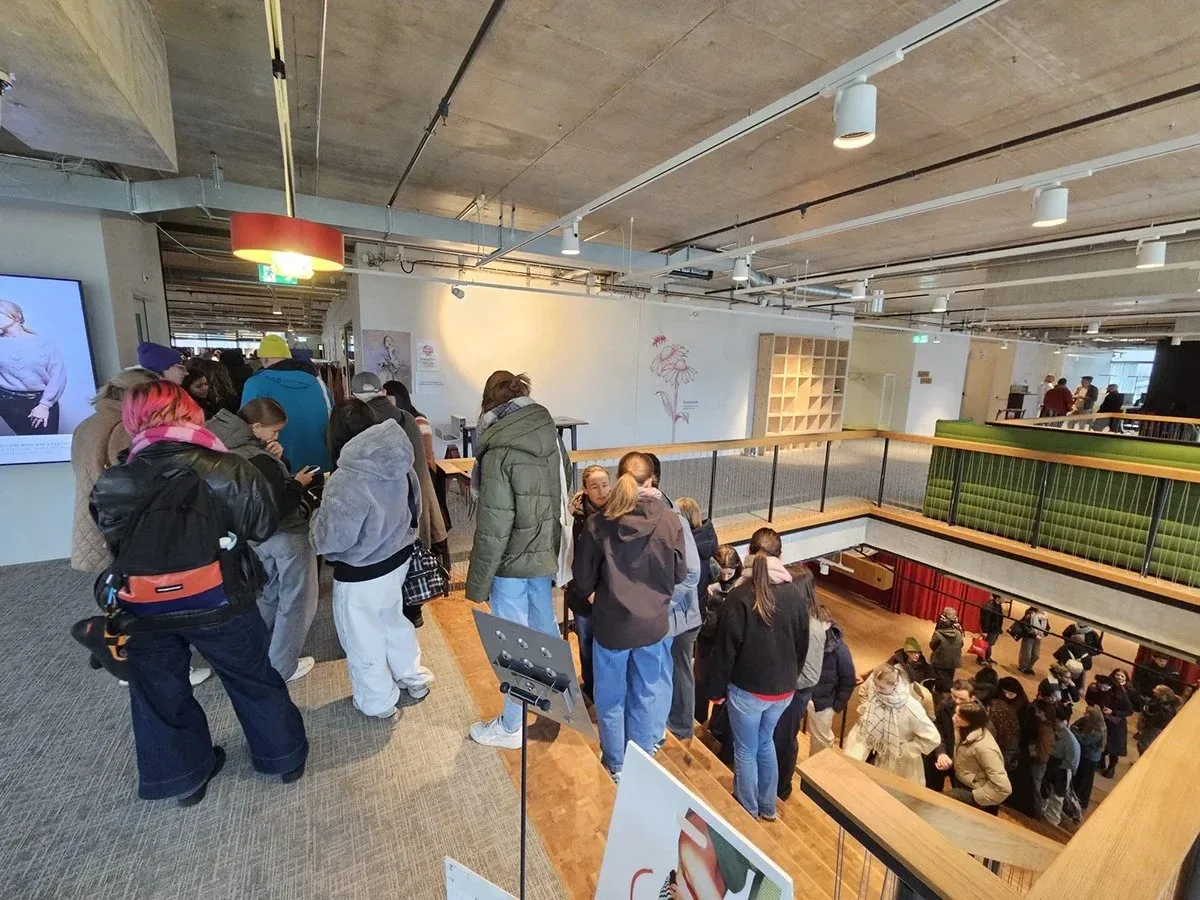
{{ c.dc.roomsIntro }}
{{ room.headline }}
{{ room.body }}
{{ c.econ.kicker }}
{{ c.econ.p1 }}
{{ c.econ.p2 }}
{{ c.econ.soloTitle }}
{{ c.econ.soloNote }}
{{ c.econ.sharedTitle }}
{{ c.econ.sharedNote }}
{{ c.econ.closeA }}
{{ c.econ.closeB }}
{{ c.econ.closeNote }}
{{ c.capability.p1 }}
{{ c.capability.p2 }}
{{ c.capability.p3 }}
{{ c.capability.close }}
{{ c.lf.defLabel }}
{{ c.lf.defTitle }}
{{ c.lf.defA }}
{{ c.lf.defB }}
{{ c.lf.a }}
{{ c.lf.b }}
{{ c.lf.c }}
{{ c.lf.kicker }}
{{ c.lf.title }}
{{ c.lf.body }}
{{ c.lf.highlight }}
{{ c.lf.closeA }}
{{ c.lf.closeB }}
{{ c.lf.footB }}
{{ c.lf.footA }}
{{ c.grow.lead }}
{{ growTitle }}
{{ growNote }}
{{ f.label }}
{{ o.label }}
{{ c.grow.closeA }}
{{ c.grow.closeB }}
{{ c.scale.kicker }}
{{ c.scale.p2 }}
{{ c.scale.p2b }}
{{ c.scale.p2c }}
{{ c.scale.nodesTitle }}
{{ c.scale.nodesBody }}
{{ c.town.p1 }}
{{ c.town.p2 }}
{{ c.town.sofaTitle }}
{{ c.town.sofaBody }}
{{ c.town.sofaClose }}
{{ c.ethics.c1 }}
{{ c.ethics.c2 }}
{{ c.ethics.c3 }}
{{ c.ethics.objectionBody }}
{{ c.ethics.rulesClose }}
{{ c.owners.lead }}
{{ g.who }}
{{ c.owners.note }}
{{ c.proof.lead }}
{{ r.kind }}
{{ r.body }}
{{ c.charlie.title }}
{{ c.charlie.body }}
{{ c.charlie.highlight }}
{{ c.charlie.tag1 }}{{ c.charlie.tag2 }}{{ c.charlie.tag3 }}
pb3
{{ c.layers.pb3Title }}
{{ c.layers.pb3Body }}
daycrunch®
{{ c.layers.dcTitle }}
{{ c.layers.dcBody }}
LEBENSFABRIK®
{{ c.layers.lfTitle }}
{{ c.layers.lfBody }}
{{ c.layers.note }}
{{ c.how.o1Title }}
{{ c.how.o1Body }}
{{ c.how.o2Title }}
{{ c.how.o2Body }}
{{ c.how.o3Title }}
{{ c.how.o3Body }}
{{ c.contact.closeA }}
{{ c.contact.closeB }}
{{ c.contact.body }}
{{ c.contact.company }}
ceo@performancebuildings.ch
{{ c.contact.phone }}
{{ c.contact.includeTitle }}